
Licensed Waterproofing in the San Fernando Valley — Done Right the First Time
Los Angeles Kitchen and Bathroom Remodeling is a licensed general contractor based at 4419 Van Nuys Blvd, Suite 407, Sherman Oaks, CA 91403, serving the San Fernando Valley since 2019. The team's waterproofing work applies the same membrane and flashing standards to foundations, decks, and exterior walls that go into every custom walk-in shower and tub-to-shower conversion built across Encino, Sherman Oaks, and West Hills.
Many homeowners wonder whether a kitchen and bath contractor can credibly handle structural waterproofing. The honest answer is yes — because the underlying discipline is identical. Membranes, drainage planes, and flashing details follow the same principles whether protecting a shower wall or a foundation. The scale changes, sure, but a licensed general contractor is the one entity positioned to manage that across every scope without losing the thread.
A fair share of the calls that come in are from homeowners cleaning up after someone else's work — incomplete membrane application, missing flashing at deck edges, shower niches that were never properly sealed. That kind of remediation experience makes this team sharper diagnosticians than contractors who only work on new installations.
Got a waterproofing problem in the San Fernando Valley? Call +1 (310) 890-4885 or request a free online estimate and we'll take a look.
What Happens When Waterproofing Fails — Real Outcomes We Correct in Encino, Sherman Oaks, and West Hills
Waterproofing failures rarely stay isolated. A shower tiled without a proper membrane saturates the cement board behind it, feeds mold into the wall cavity, and wicks moisture to the subfloor beneath. Visible signs like discoloration or odor often appear only after the damage has already spread well beyond the original failure point.
Deck sealant jobs gone wrong show up regularly in West Hills and Encino — cases where a previous contractor sealed the surface without fixing the drainage slope first, so water just sat against the substrate until rot took hold. Exterior stucco walls develop efflorescence — white mineral deposits — when flashing pulls away from the wall and allows water to migrate behind the cladding. Foundation cracking follows when that water reaches the slab through unprotected joints.
Before any repair can begin, waterproofing failures almost always demand tearing out finished surfaces first. Tile, cabinetry, flooring — everything comes out before drying, mold treatment, and rebuilding can start. That demolition-through-rebuild scope is exactly what this team's licensed general contracting handles end to end, without subcontracting the accountability to someone else.
When one contractor builds the entire bathroom, they know the exact path water takes the moment a membrane gives out — and that's why the waterproofing details here hold up through every Los Angeles rainy season, not just the first one.
Types of Waterproofing We Handle Across Los Angeles
Foundation waterproofing is where it starts for many older Valley properties, targeting the perimeter and below-grade surfaces most vulnerable to hydrostatic pressure. Exterior membrane application, interior drainage channels, and sump system integration keep basements and crawl spaces dry on hillside properties where original construction often skipped these details entirely. From there, the scope shifts above grade — and deck waterproofing is one of the most frequently mishandled areas in residential construction. Second-story decks in West Hills and Encino regularly fail at wall transitions where flashing was never installed. The correct fix combines a topical membrane, a corrected drainage slope, and properly lapped flashing that channels water away from the structure below — not just over it.
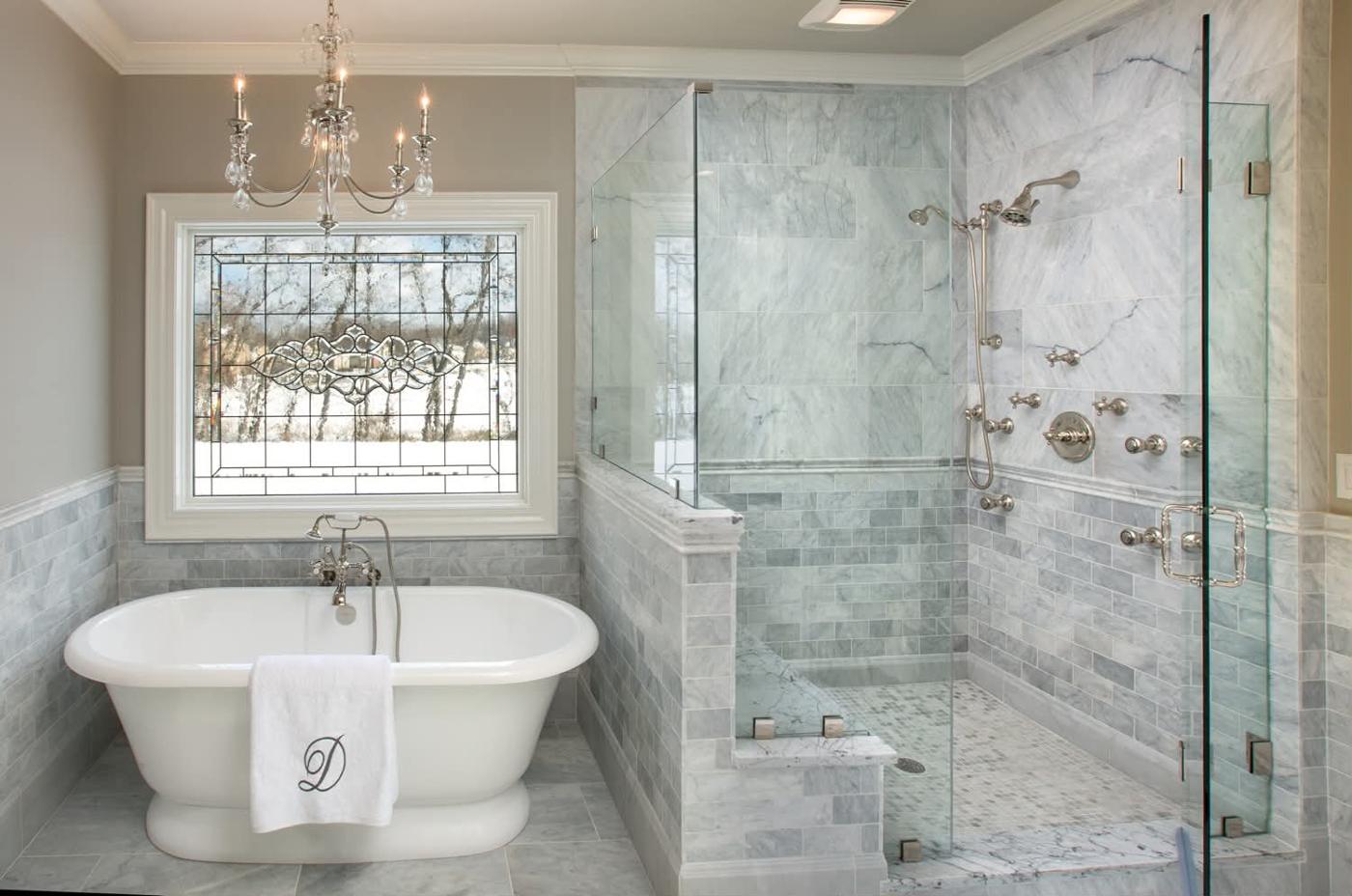
Shower waterproofing uses sheet membranes or liquid-applied systems behind tile, pre-sloped shower pans, linear drain integration, and sealed curbs and niches. Every custom walk-in shower and tub-to-shower conversion built by this team includes waterproofing systems built to industry standards. Exterior wall waterproofing rounds out the scope, addressing the stucco-clad homes throughout Sherman Oaks where missing or deteriorated flashing at windows and penetrations allows moisture into the wall cavity. Weather-resistant barriers and proper drainage plane detailing stop that intrusion before it reaches the framing.
Membranes, Drainage, and Flashing — The Technical Work That Actually Stops Water
Sheet-applied membranes are bonded directly to a rigid substrate — the right choice for shower floors and deck surfaces where dimensional stability is predictable. Liquid-applied systems are brushed or rolled on and cure to a seamless film, making them far more effective on complex geometries: foundation walls with irregular tie-hole patterns, curved curbs, or anywhere a sheet membrane would require overlapping seams that become failure points.
The membrane gets most of the attention, but drainage design is just as critical. A properly engineered drainage plane moves water laterally toward an outlet rather than allowing it to pond against the structure. In shower applications that means a pre-sloped mortar bed — typically a quarter-inch drop per linear foot — directing water to the drain before it ever contacts the membrane under load. On exterior walls, drainage mat and weep screeds serve the same function, creating an air gap that channels moisture down and out.
Flashing at every transition point — wall-to-deck, window-to-wall, pipe penetration, curb edge — is where the majority of failures originate. Correct installation requires proper lapping order, compatible sealants, and mechanical fastening so flashing cannot separate under thermal movement. Skipping a single transition creates an entry point that undoes every other layer.
Permits get pulled for every applicable scope, and city inspections are coordinated so the waterproofing layer is documented and signed off before tile or other finishes cover it — meeting current Los Angeles building requirements, not just installed and forgotten.
How Waterproofing Fits Into a Full Kitchen or Bathroom Remodel
Every walk-in shower this team builds includes waterproofing systems as part of the standard scope — not an optional upgrade scheduled after tile selection. The walk-in shower service includes waterproofing built to industry standards, which means the same contractor who specifies the tile also installs what goes behind it.
Tub-to-shower conversions require demolition down to the substrate, which is exactly when pre-existing moisture damage surfaces. Before any new membrane goes in, the crew assesses the exposed framing and substrate, addresses any damage found, and then proceeds with a fresh waterproofing system, tile, and frameless glass — in that order.
Kitchen remodels that relocate plumbing or add a prep sink to a custom island also require waterproofing attention at the under-sink cabinet and dishwasher adjacencies. Slow fixture leaks are a leading source of concealed damage to custom cabinetry and subfloor materials.
Homeowners in Encino and Sherman Oaks who hire one licensed general contractor for demolition, waterproofing, tile, plumbing, electrical, cabinetry, and countertops eliminate the coordination gaps where water damage most often originates. When accountability belongs to a single team, nothing falls between trades. Contact us to discuss your full remodel scope.
How to Choose a Waterproofing Contractor in Los Angeles — Steps Every Homeowner Should Take
The right waterproofing contractor in Los Angeles holds a current California general contractor license and carries both general liability and workers' compensation insurance — verify both before any agreement is signed, because unlicensed work can void your homeowner's insurance claim if a failure occurs later.
Ask specifically which waterproofing system will be used and who manufactures it. A qualified contractor names the product, explains why it suits your application, and confirms whether it requires a licensed installer. Vague answers like "we use quality materials" signal a crew that doesn't actually understand what they're installing.
Confirm that permits will be pulled for any structural or drainage scope and that a licensed city inspector will sign off on the waterproofing layer before tile or other finishes cover it. That inspection creates a documented record protecting you at resale and in any future insurance dispute.
Request examples of remediation work specifically — not just new construction photos. A contractor who has diagnosed and corrected another contractor's failure understands where and why waterproofing systems break down in the real world. At Los Angeles Kitchen and Bathroom Remodeling, correcting other contractors' incomplete or failed waterproofing scopes is a regular part of our work in Northridge, Woodland Hills, and throughout the Valley — and that diagnostic experience directly informs how we build new installations. Call +1 (310) 890-4885 to schedule your assessment.
Neighborhoods and Landmarks We Serve Across the San Fernando Valley
Los Angeles Kitchen and Bathroom Remodeling operates from its Sherman Oaks office at 4419 Van Nuys Blvd, Suite 407, and waterproofing calls come from properties throughout the surrounding Valley. Along Ventura Boulevard and the hillside streets south toward Mulholland Drive, older Sherman Oaks homes contend with drainage that runs directly against foundations — a pattern the team addresses with perimeter membrane work and corrected drainage planes before any finished surface goes back in.
In Encino, the hillside estates east of Balboa Boulevard generate deck and exterior wall calls, where second-story construction from earlier decades rarely included proper flashing at wall transitions. West Hills properties near Victory Boulevard and the residential tracts bordering the Santa Monica Mountains face extended rainy-season exposure on south- and west-facing walls — among the higher-risk orientations for stucco moisture intrusion in the Valley.
The same licensed crew that handles waterproofing in these communities also completes full kitchen and bathroom remodeling in Studio City and serves homeowners in Woodland Hills and Granada Hills. That cross-service reach means waterproofing scopes within a broader renovation are coordinated by the same team — no separate subcontractor, no accountability gap between trades.
Why a Kitchen and Bath Remodeler Makes the Best Waterproofing Contractor
Waterproofing is not a separate trade for a contractor who builds wet environments every day. Every custom shower, every tub-to-shower conversion, and every bathroom gut renovation requires the team to think like a waterproofing specialist before a single tile is set — which means this isn't a bolt-on service, it's foundational to how every project is built.
Because Los Angeles Kitchen and Bathroom Remodeling self-performs demolition, tile installation, plumbing rough-ins, and general contracting under one license, no waterproofing detail gets lost in handoffs between subcontractors. The same crew that installs the membrane also installs the drain, sets the tile, and hangs the frameless glass. That continuity eliminates the accountability gaps where failures almost always originate.
Having corrected other contractors' waterproofing failures across Encino, Sherman Oaks, and West Hills, this team has developed a practical understanding of how water travels through a building assembly — because they see the consequences of compromised installations firsthand and apply those lessons directly to new builds.
Homeowners who need waterproofing as part of a broader bathroom renovation benefit from a single contract, a single point of contact, and one warranty conversation — rather than coordinating between a waterproofing sub and a remodeling crew who each claim the other is responsible when something goes wrong.
Get a Free Waterproofing Estimate From Our Sherman Oaks Office
Property owners in Encino, Sherman Oaks, and West Hills can reach the team directly at +1 (310) 890-4885 or submit project photos online to receive a detailed written waterproofing estimate at no charge. Sending photos before a site visit lets the crew identify the scope, system type, and any visible remediation needs before anyone drives out — so the first conversation is already informed.
Open Sunday through Thursday from 8 AM to 6 PM, Friday from 8 AM to 2 PM, closed on Saturday.
As a licensed general contractor, this team can bundle waterproofing into a broader bathroom remodeling, deck renovation, or whole-home renovation project under a single contract with a single crew — eliminating the coordination gaps that produce most water damage complaints. There is no separate waterproofing subcontractor to schedule, no split warranty, and no ambiguity about who is accountable when the work is done.
For in-person consultations, the office is located at 4419 Van Nuys Blvd, Suite 407, Sherman Oaks, CA 91403. Whether the project is a failed shower membrane, a leaking second-story deck, or a foundation showing signs of moisture intrusion, the estimate is free and the written scope will tell you exactly what needs to happen and why.
Frequently Asked Questions
7 questions answered
How do I know if my shower needs to be re-waterproofed or just regrouted?
If grout is cracking or discolored, regrouting alone is not enough — that surface damage is usually a symptom of a failed membrane underneath, not the cause of the problem. A reliable way to tell is to press on the tile near the floor or curb; if it flexes or sounds hollow, water has already reached the substrate behind it. At that point, the tile needs to come off so the membrane can be inspected and replaced properly before retiling.
What permits are required for waterproofing work in Los Angeles?
Waterproofing that is part of a structural repair, deck replacement, or bathroom remodel in Los Angeles typically requires a building permit pulled through the LA Department of Building and Safety. Standalone membrane replacement on a shower may not require a separate permit, but any work that involves modifying framing, drainage, or the building envelope almost always does. A licensed general contractor handles permitting as part of the scope so homeowners are not left managing that process themselves.
Can waterproofing be added to an existing deck without replacing the whole surface?
It depends on the condition of the existing substrate — if the decking material is sound and the drainage slope is adequate, a topical membrane system can sometimes be applied over the existing surface after proper cleaning and preparation. If the substrate has rotted or the slope is draining toward the structure rather than away from it, the deck surface needs to come up first to correct those issues before any membrane is applied. Skipping that diagnostic step is one of the most common reasons deck waterproofing fails prematurely.
What is the difference between interior and exterior foundation waterproofing, and which one lasts longer?
Exterior foundation waterproofing applies a membrane directly to the outside face of the foundation wall, stopping water before it contacts the structure — it is generally considered the more durable long-term solution because it addresses hydrostatic pressure at the source. Interior systems, such as drainage channels and sump integration, manage water that has already entered the wall assembly and redirect it before it causes visible damage. In practice, the right approach depends on site conditions, access, and whether excavation is feasible, and many Valley properties with limited exterior access rely on interior drainage as the primary system.
How long does waterproofing work typically take for a shower or deck in the San Fernando Valley?
A shower waterproofing scope — membrane application, curing, and inspection before tile goes down — typically adds one to two days to a bathroom remodel timeline, and that curing window is not a step that should be compressed. Deck waterproofing timelines vary more widely depending on square footage, whether the existing surface needs to be removed, and how much flashing work is required at wall transitions. Remediation projects where a previous contractor's failed work has to be stripped out first will always take longer than a new installation, which is why an accurate assessment before work begins matters.
Does homeowners insurance cover damage caused by waterproofing failures in Los Angeles?
Most standard homeowners insurance policies in California exclude damage attributed to gradual water intrusion or lack of maintenance, which is exactly how insurers classify most waterproofing failures — even significant ones. Sudden and accidental water damage, such as a pipe burst, is typically covered, but a membrane that degraded over time is not. Documenting a failed contractor's work and having a licensed contractor assess the cause of the damage in writing can sometimes support a claim dispute, but homeowners should not assume coverage without reviewing their specific policy.
How do I find a waterproofing contractor in Los Angeles who can also handle the tile and remodel work afterward?
The most straightforward way to avoid coordination problems is to hire a licensed general contractor who performs both the waterproofing and the finish work — that way accountability for the full scope rests with one party rather than being split between a specialty waterproofing subcontractor and a separate tile or remodeling crew. Los Angeles Kitchen and Bathroom Remodeling handles waterproofing as an integrated part of bathroom and deck projects, meaning the same team that installs the membrane also sets the tile and manages any required permits. The office is at 4419 Van Nuys Blvd, Suite 407, Sherman Oaks, CA 91403, and free online estimates are available by calling +1-310-890-4885.