
Vinyl Fencing and Double Gates: What Los Angeles Homeowners Are Choosing in 2026
Across the San Fernando Valley, homeowners in neighborhoods like Studio City, Sherman Oaks, and Encino are turning to vinyl fencing with double gates for practical reasons that go beyond appearance. As more San Fernando Valley residents deal with dense lot spacing and aging wood fences that need constant attention, vinyl has become the go-to alternative — one that holds its appearance through years of sun and seasonal rain without demanding much in return.
Wood fencing exposed to intense sun, dry heat, and seasonal rain can warp, rot, and deteriorate faster than many homeowners expect. Wood soaks up moisture; vinyl never does. It's engineered for outdoor exposure from day one, and homeowners who've maintained both materials will tell you pretty quickly which one they'd choose again.
Privacy, a more secure perimeter, convenient backyard access — most fencing projects come down to one or more of these three things. A double-gate system can address all three in a single installation, and how well that installation is executed shapes how the fence and gates hold up for years to come.
This article is written for homeowners who want a fence and gate system that looks professional, functions correctly from day one, and holds up for years. If you're the kind of person who thinks past installation day and treats outdoor improvements as long-term investments, you're in the right place.
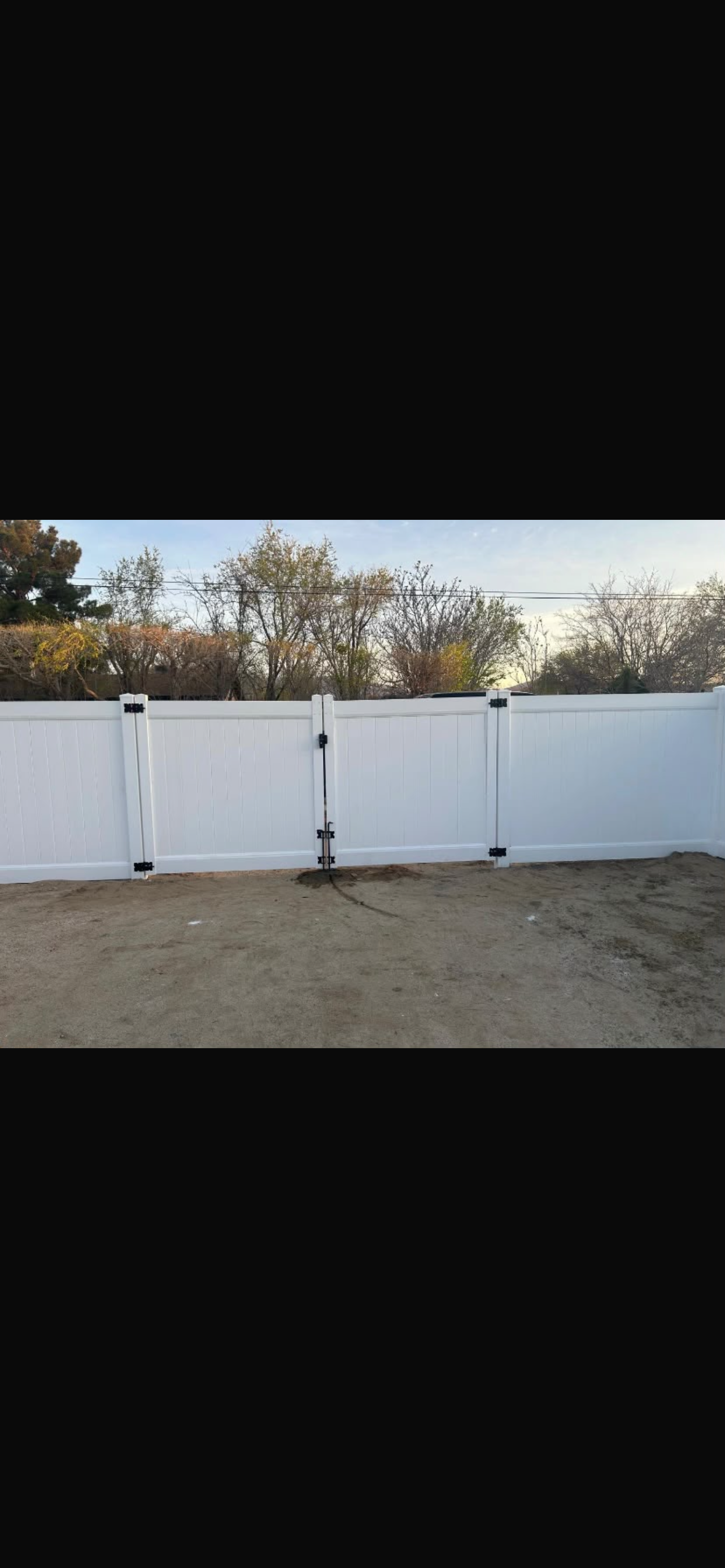
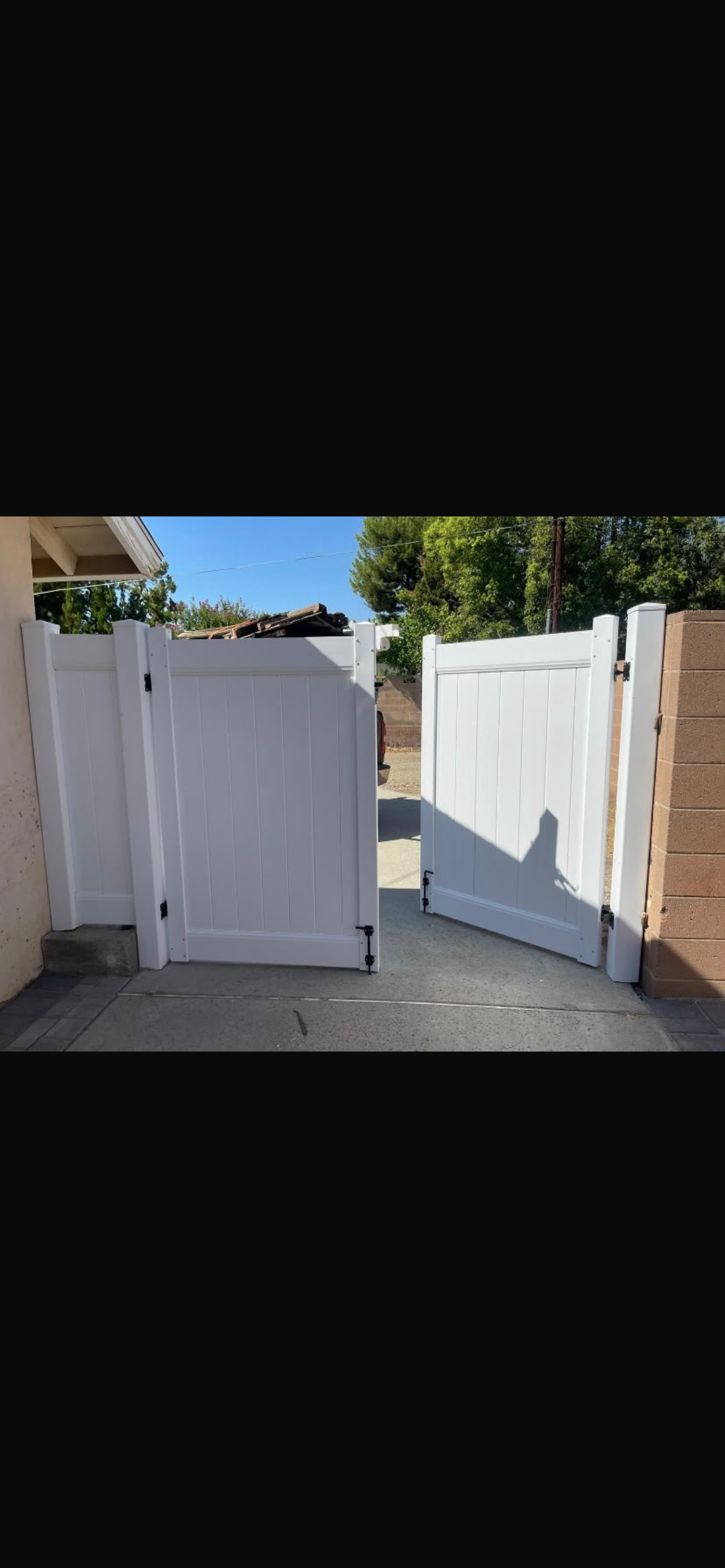
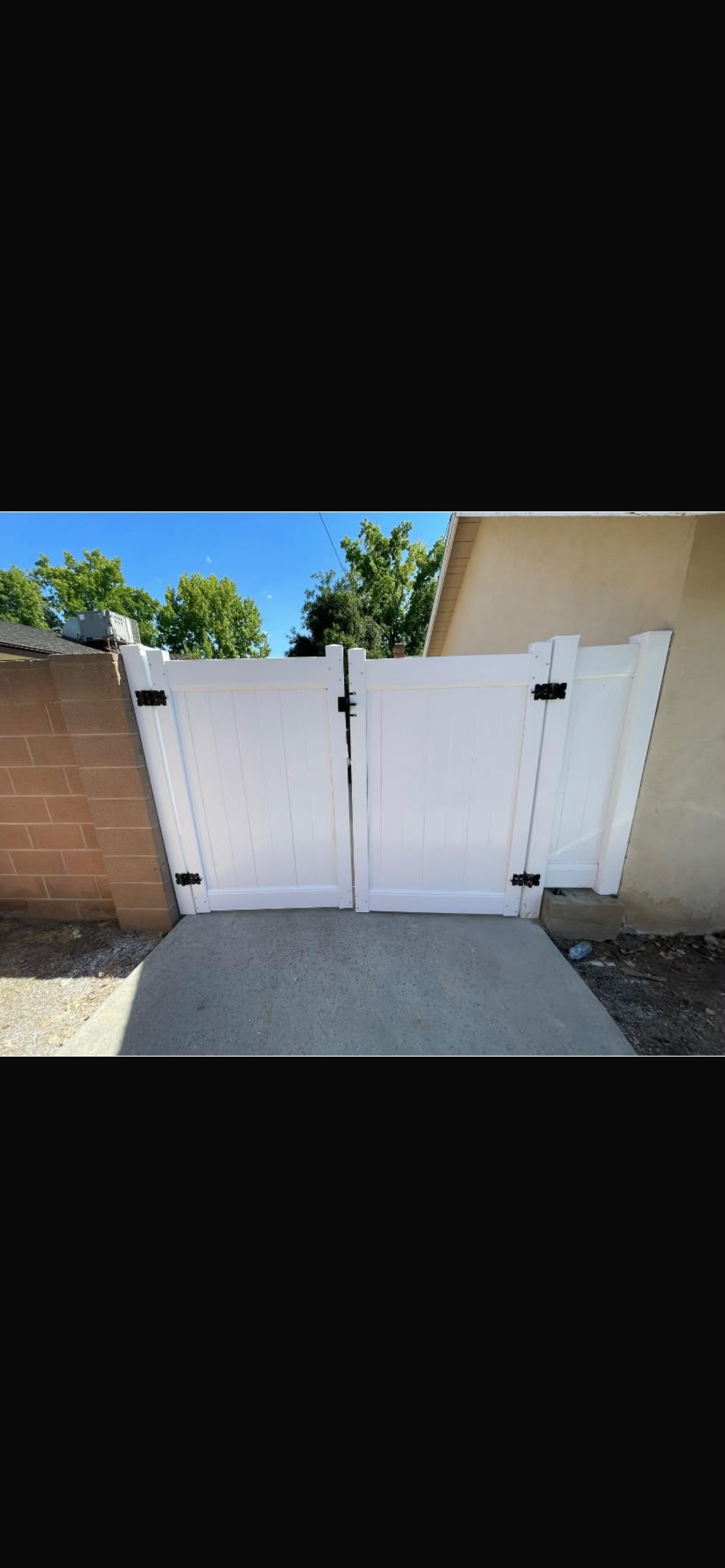
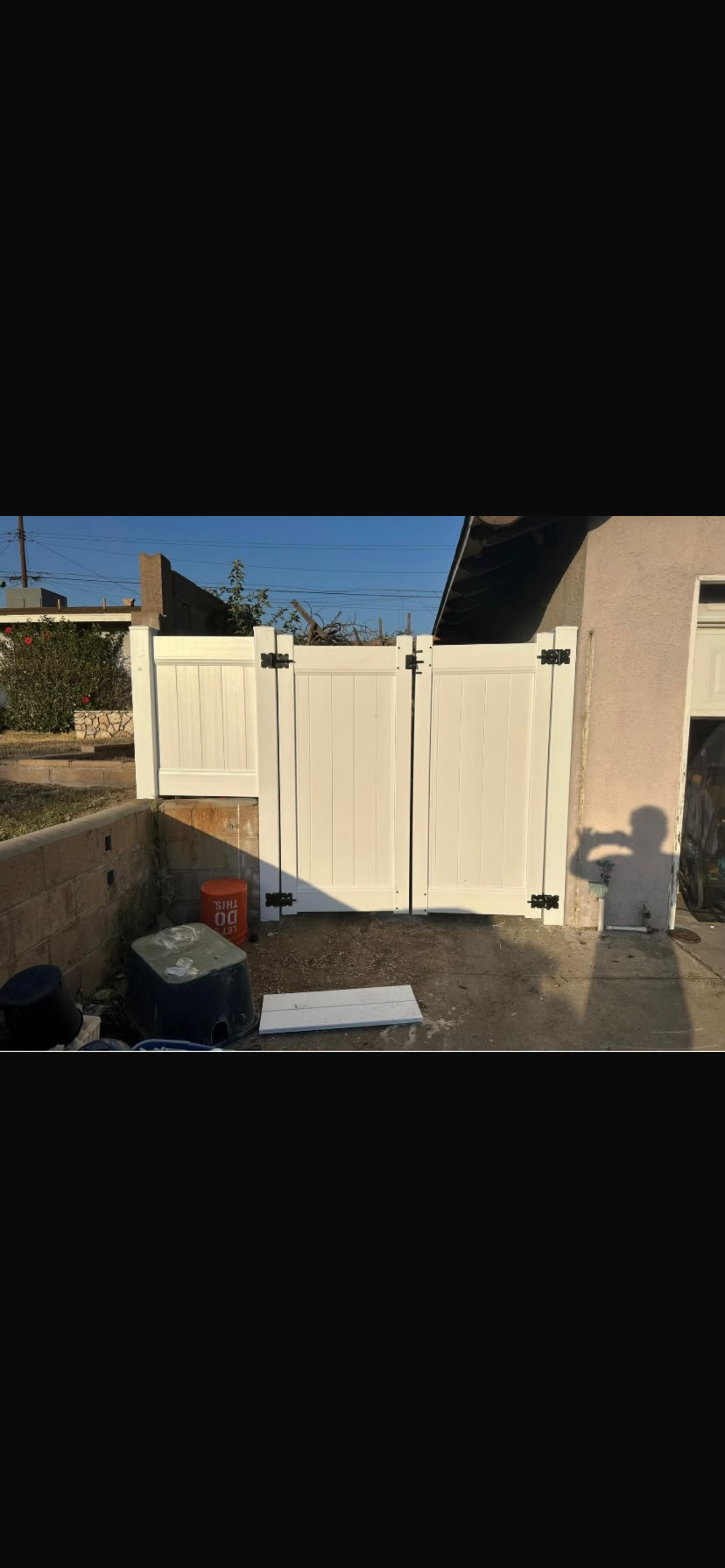
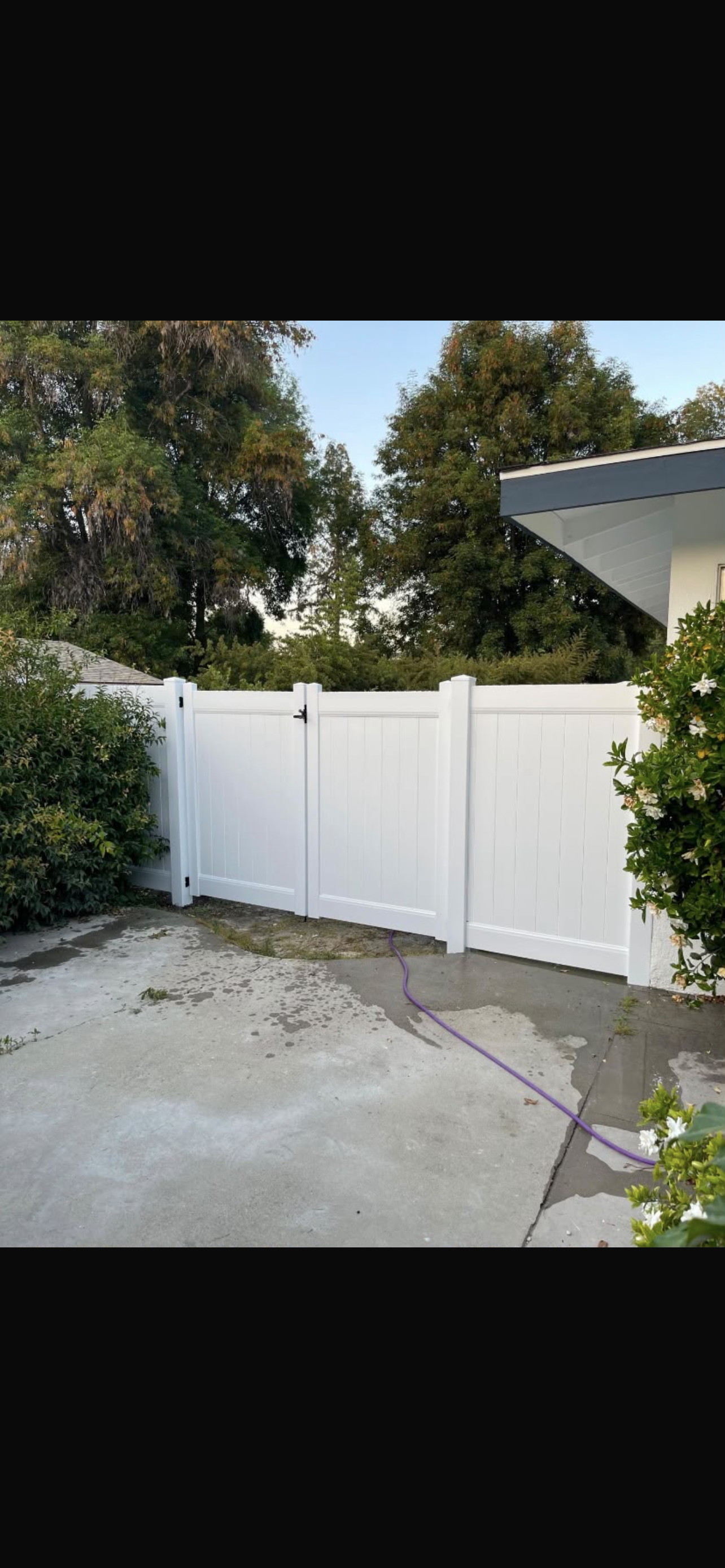
Studio City Case Study: A Complete Vinyl Fence and Double-Gate Installation Done Right
In March 2024, a Studio City homeowner came to us with four clear goals: more privacy, better backyard security, convenient double-gate access for vehicles and foot traffic, and a cleaner exterior appearance overall. The existing property perimeter wasn't delivering any of them.
Before a single post was set, we measured the full fence layout carefully against the existing property boundaries. That step mattered because the double-gate section required especially precise planning — even small misalignments during installation cause gates to drag, bind, or fail to latch properly over time.
Our process followed a deliberate sequence: layout planning, post setting and securing, vinyl panel installation with continuous level checks, and then gate installation with fine adjustments to spacing and clearance before we tested the operation. The gates needed to open, close, and align cleanly under their own weight — not just during installation, but years later.
No residential lot is perfectly flat or square. Real-time adjustments were constant throughout — fitting a uniform, level fence line to a property with its own irregularities means you can't just follow a plan drawn on paper and call it done.
The finished result was a clean, modern vinyl fence with double gates that functioned correctly from day one and meaningfully improved both the security and street presence of the property. That outcome doesn't happen by accident — it comes from taking the time to measure, level, and align every component before locking it in place.
What Homeowners Get After a Professional Vinyl Fence and Double-Gate Installation
One significant benefit is how immediately the change registers. Solid vinyl privacy panels screen sightlines from neighboring properties and passing traffic, turning a backyard that felt exposed into a genuinely usable outdoor space. Families with children and pets feel that difference on the first day.
Security follows directly from proper installation. When a double-gate system is aligned correctly, it creates a controlled access point that a sagging wood gate or chain-link opening simply can't match — both as a physical barrier and as a deterrent against unauthorized entry.
Curb appeal improves without ongoing effort. Vinyl does not absorb moisture, so it won't discolor or degrade the way wood does after repeated weather exposure. Keeping the fence clean is generally all the upkeep required once it is properly installed.
That low-maintenance benefit, however, only holds when the installation is done correctly. Posts that are set at the wrong depth or spacing allow panels to shift and gaps to open over time. Good post work is really the foundation everything else depends on — when posts are set at the right depth, spaced correctly, and held plumb while the concrete cures, the fence holds its shape for years without asking much of the homeowner. That combination of durability and minimal upkeep is what separates a professionally installed vinyl fence from a short-term fix.
Why Installation Quality Matters More Than Most Homeowners Expect
A surprisingly common assumption is that because vinyl requires little maintenance, putting it up must be the easy part. That's what leads homeowners to accept rushed work — and the problems show up within the first year.
Post depth, post spacing, and continuous leveling are where a vinyl fence is either built correctly or isn't. Posts that are not set to the correct depth can shift under load. Posts spaced incorrectly create tension across panels, causing them to bow outward or pull away from their connections over time. None of these failures are obvious on installation day — they develop gradually, and by the time they're visible, correcting them means pulling posts and starting over.
Gate alignment is where errors become immediately noticeable. A gate hung even slightly off-plumb will drag against the ground, fail to latch cleanly, or swing unevenly under its own weight. Double gates compound this — both leaves must be set in precise relationship to each other, not just to the posts. A small misalignment at installation becomes a gate that won't close properly by the following summer.
Think of the post work as the part of the fence no one ever sees — and the part that controls everything they do. Every panel, every hinge, and every latch performs only as well as the posts supporting them. When that foundation is compromised, the problems compound quickly, and fixing them later costs significantly more than doing it right the first time.
Types of Vinyl Fencing and Gate Configurations We Install Across Los Angeles
Pick the wrong style for a space and you'll know it fast. For most backyards and side yards, full-height solid privacy panels are the right call — they eliminate sightlines entirely, which is what most homeowners are after. Where airflow matters alongside privacy, semi-privacy panels with spaced pickets offer a practical middle ground. Front yards that need property line definition without a full enclosure tend to work well with open picket fencing, which improves curb appeal without boxing in the space.
On the gate side, the choice usually comes down to the width of the opening. Double gates — two paired leaves that open from a center point — are designed for wide driveway entrances and backyard openings where a single panel simply won't provide enough clearance for vehicles or equipment. Single swing gates work well alongside privacy fence runs where a controlled pedestrian access point is all that's needed. For larger lots that need property line definition without full enclosure, ranch rail and post-and-rail configurations in vinyl keep things open while still marking the boundary cleanly.
If you are weighing options for your property, contact our team to discuss which configuration fits your layout and goals.
What the Installation Process Actually Looks Like From Start to Finish
A professional vinyl fence and double-gate installation follows five distinct steps, and the quality of each one determines the outcome of all those that follow.
Step 1 — Site measurement and layout planning. We walk the full property line, measure every fence run, mark gate locations, and account for any grade changes or obstacles before a single hole is dug. This is where double-gate clearances are confirmed on the ground, not just on paper.
Step 2 — Post setting. Holes are dug to the correct depth for the fence height and soil conditions, posts are set in concrete, and each one is verified plumb and spaced accurately before any panel work begins. This step cannot be rushed — the concrete needs to fully cure.
Step 3 — Panel installation and leveling. Vinyl panels are attached to set posts with continuous level checks across each run. Adjustments happen in real time as the installation progresses along the property.
Step 4 — Gate installation and alignment. Hinges are placed precisely, gate leaves are hung and spaced correctly relative to each other, and latch alignment is confirmed before any hardware is permanently secured.
Step 5 — Final inspection. We test gate operation through multiple open-and-close cycles, check every panel connection, and confirm the full fence line is straight and secure before leaving the property. Call us at 310-890-4885 to discuss your project.
Common Concerns Homeowners Have Before Installing a Vinyl Fence
Most homeowners raise the same four concerns before committing to a vinyl fence project, and each one deserves a direct answer.
Cost: Vinyl carries a higher upfront material cost than wood, but that comparison ignores what wood costs over time. Repainting, staining, rot repair, and board replacement add up steadily across the life of a wood fence. Vinyl eliminates those ongoing expenses.
Durability: Quality vinyl fencing is engineered specifically for long-term outdoor use — UV-resistant, moisture-proof, and designed for sustained sun exposure. Los Angeles conditions are well within what the material is built to handle.
Appearance: A common worry is whether the finished fence will actually look clean and level. A professionally installed vinyl fence looks sharp immediately after installation — there is no weathering period, no waiting for paint to cure, and no gradual settling that changes the look.
Gate function: Double gates that are installed with precise spacing and alignment operate smoothly from day one. This is the concern most directly tied to installation quality. Properly hung gates with correct clearances latch cleanly and swing evenly — problems only arise when that alignment work is skipped.
If any of these concerns apply to your property, contact us for a quote and we will walk through the specifics of your project honestly.
Cost Factors, Timeline, and What Affects the Scope of a Vinyl Fence Project
Fence length and panel height are the two primary drivers of material and labor cost. Longer runs require more posts, more panels, and more installation time. Taller privacy panels add material cost per linear foot and require deeper post work to maintain stability under wind load.
Gate configuration adds meaningful scope beyond a standard fence run. Double gates require heavier hardware, additional framing at the opening, and the precise alignment work described throughout this article — all of which takes more time than an equivalent length of straight fence panel.
Site conditions are the variable most homeowners underestimate. Sloped terrain requires staggered or raked panel installation to keep the fence line following the grade cleanly. Existing structures, hardscape, or obstacles near the fence line can require custom adjustments that affect both timeline and material requirements.
A common question is how long a residential vinyl fence project takes. Most straightforward installations are completed within a focused project window, but properties with significant slope changes, large double-gate openings, or irregular boundaries naturally take longer. A detailed quote will outline the expected schedule based on your specific property — which is why an accurate site measurement always comes before a final timeline commitment. Contact us to request a quote and get a realistic scope for your project from the start.
Neighborhoods and Areas We Serve Across Los Angeles and the San Fernando Valley
Los Angeles Kitchen and Bathroom Remodeling serves vinyl fencing and double-gate projects across a wide range of communities, each with its own property types and installation demands.
In Sherman Oaks and Encino, single-family homes and HOA communities frequently request full perimeter privacy fencing along side yards and rear property lines. In Studio City and Toluca Lake, hillside lots and flat-lot properties alike benefit from custom fence layouts and double-gate access points for driveways and rear yards.
Calabasas and West Hills properties tend to sit on larger lots where full perimeter fencing and wide double gates — sized for RV or multi-vehicle access — are among the most commonly requested configurations. In North Hollywood, Van Nuys, and Reseda, densely built San Fernando Valley lots make solid privacy fencing between neighboring properties a practical necessity rather than a luxury.
Along the Beverly Hills and Bel Air adjacent corridors, appearance standards are high enough that the finished look of a fence and gate system carries as much weight as its function — a clean, precisely installed vinyl fence meets both requirements without compromise. We serve all of these communities from our office at 4419 Van Nuys Blvd, Suite 407, Sherman Oaks, CA 91403.
How Vinyl Fencing Compares to Wood, Aluminum, and Chain Link for Residential Properties
Vinyl consistently outperforms the three most common fencing alternatives across the criteria that matter most to residential homeowners: privacy, appearance, and long-term maintenance burden.
Wood requires regular painting, staining, and sealing to resist rot, splitting, and moisture damage. Skip a season of maintenance and the deterioration accelerates — boards warp, posts weaken at the base, and the fence line starts to look neglected. Vinyl holds its appearance without any of that ongoing effort.
Aluminum is genuinely durable and won't corrode, but its open picket construction makes it a decorative or boundary fence rather than a privacy solution. If your goal is visual screening from neighbors or street traffic, aluminum simply isn't designed for that application.
Chain link is the least expensive option upfront and nearly the least useful for residential purposes. It provides no privacy, offers minimal resistance to visual access, and does nothing for a home's curb appeal. It is a utilitarian solution that looks like one.
For homeowners who need privacy, a clean finished appearance, low long-term maintenance, and a gate system that functions correctly and looks professional, vinyl is a strong all-around choice across every comparison. The higher upfront material cost reflects a product that doesn't ask for anything more once it's properly installed.
This Is Not for Every Homeowner — Who Benefits Most From Professional Vinyl Fence Installation
Professional vinyl fence installation is built for homeowners who want a finished result that performs correctly for years — not a temporary barrier installed as quickly as possible. If your priority is finding the cheapest crew to pound posts in an afternoon without checking depth, spacing, or gate alignment, this service is not the right fit. That approach produces fences that lean, panels that separate, and double gates that stop functioning properly within a few seasons.
The homeowners who benefit most are those thinking past installation day. Families who need a secure perimeter for children and pets, homeowners who want genuine privacy in a dense Los Angeles neighborhood, and property owners who treat outdoor improvements as long-term investments rather than quick fixes — these are the people this work is designed for.
Property managers, HOA boards, and homeowners preparing a property for sale are equally strong candidates. A clean vinyl fence with properly functioning double gates is one of the most visible exterior improvements a property can have — it signals care and attention before anyone steps through the front door.
If that describes your situation, contact us for a quote and we will assess your property honestly and give you a realistic picture of what a professional installation involves.
Get a Quote for Professional Vinyl Fence and Double-Gate Installation
Every vinyl fence and double-gate project starts with a conversation about your specific property — the layout, the goals, and any site conditions that will shape the installation plan. That conversation costs nothing, and it ensures the written quote you receive reflects what your project actually involves, not a generic estimate built on assumptions.
Our team brings years of hands-on experience with residential exterior projects across Los Angeles and the San Fernando Valley, including fencing, gates, and property improvements for single-family homeowners, property managers, and HOA communities. That experience shows in how we measure, plan, and execute — before a single post is set.
A properly installed vinyl fence is a long-term improvement to your property's privacy, security, and appearance. Getting it right from the start is worth the time it takes to discuss the details upfront.
Reach us by phone at +1 (310) 890-4885 or visit our office at 4419 Van Nuys Blvd, Suite 407, Sherman Oaks, CA 91403. Open Sunday through Thursday from 8 AM to 6 PM, Friday from 8 AM to 2 PM, closed on Saturday. You can also submit your project details online to receive a written quote without leaving home.
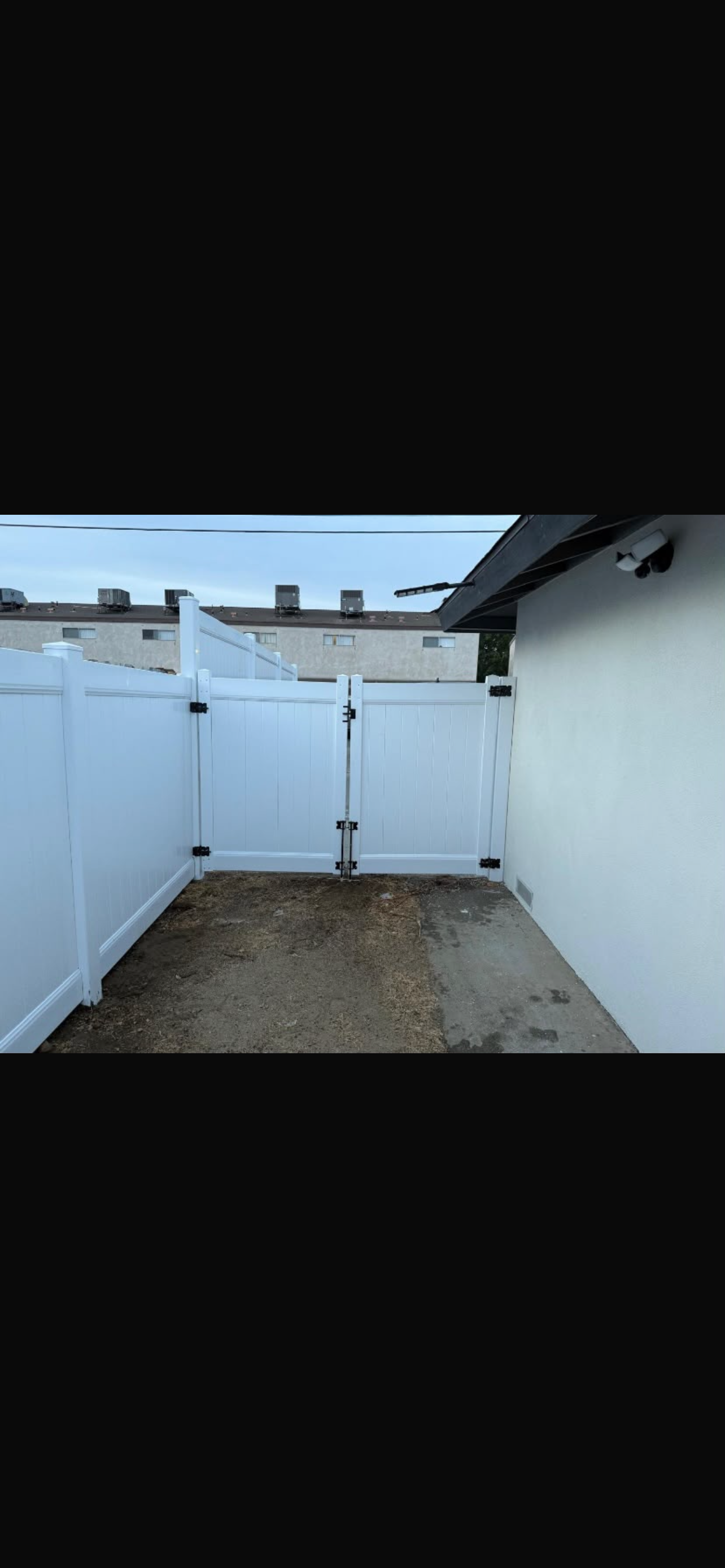
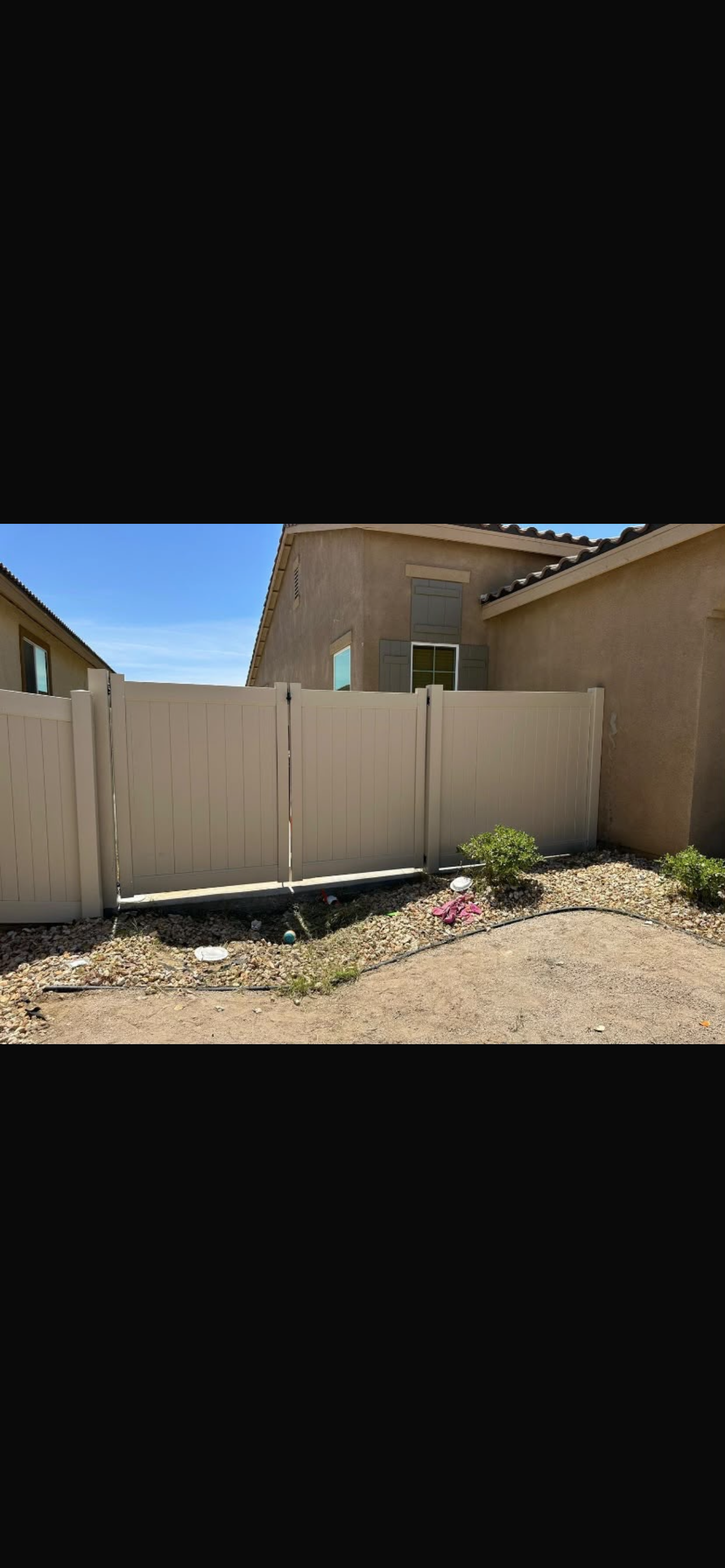
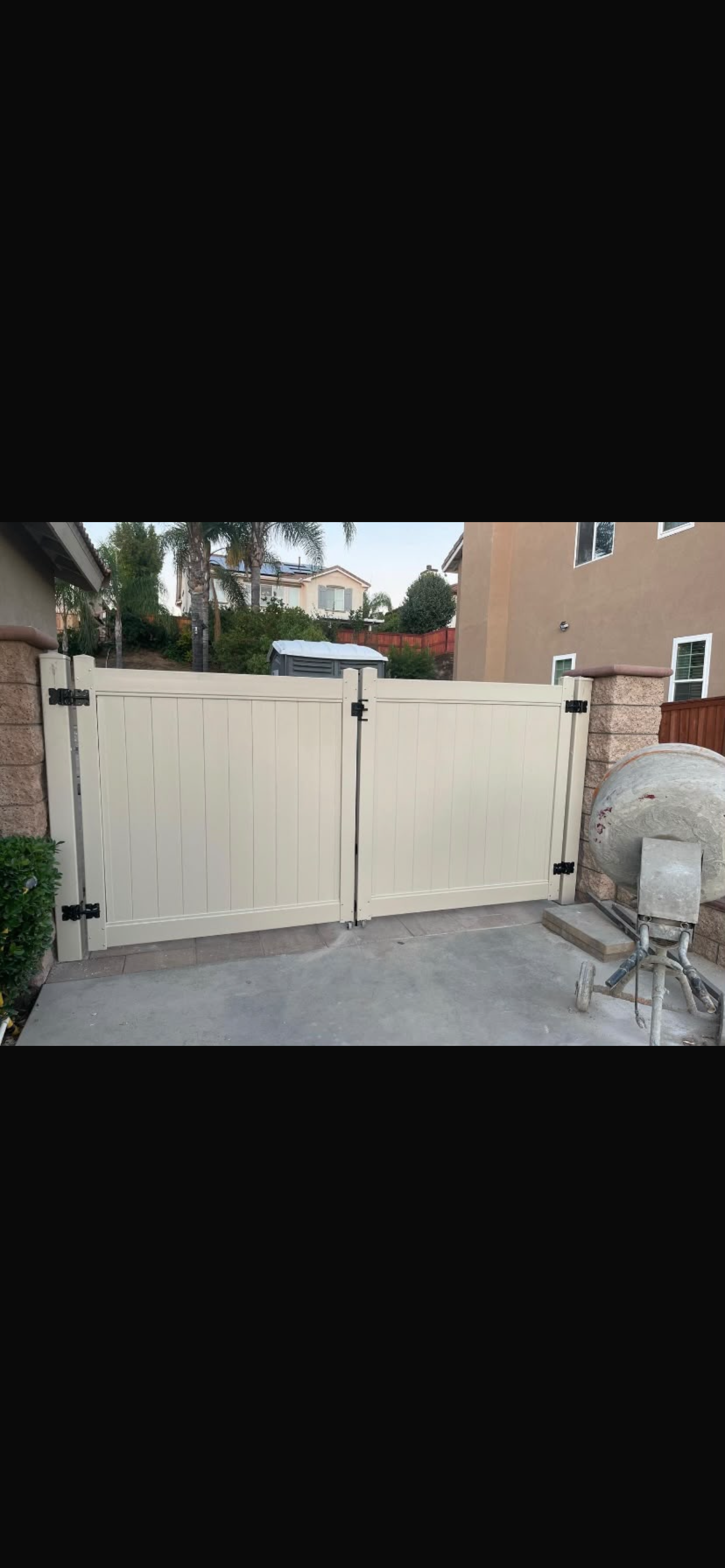
Project Photos
Frequently Asked Questions
7 questions answered
How long does a professionally installed vinyl fence typically last?
A properly installed vinyl fence can last for decades without the rotting, warping, or structural degradation that shortens the lifespan of wood fencing. The key word is properly — posts set at the correct depth and spacing, with panels leveled and secured throughout installation, are what determine long-term durability. Vinyl that is well-installed and occasionally cleaned requires little else in the way of upkeep over its life.
Do I need a permit to install a vinyl fence or double gate in Los Angeles?
In many Los Angeles jurisdictions, fencing above a certain height requires a permit, and double gates that provide vehicle access may have additional requirements depending on the municipality and zoning. Requirements vary between cities within the San Fernando Valley, so it is worth verifying with your local building department before installation begins. A contractor experienced with residential property work in Los Angeles will be familiar with local requirements and can help you understand what applies to your project.
Can vinyl fencing be installed on uneven or sloped ground?
Yes, vinyl fencing can be installed on sloped ground using either a stepped or racked installation approach, depending on the fence style and the degree of slope. Stepped installation creates a stair-step profile along the fence line, while racking angles the panels to follow the grade more gradually. A sloped lot requires more precise post placement and planning than a flat yard, especially if double gates are involved, because gate clearance and alignment become harder to achieve when grade changes near the gate opening.
What type of vinyl fence is best for privacy in a residential backyard?
A full-privacy vinyl fence with tongue-and-groove or overlapping solid panels is the most effective choice for eliminating sightlines from neighboring properties and passing traffic. These panels install without gaps, so there is no visual access to the yard from the street or adjacent lots. For homeowners also installing double gates, choosing a matching solid-panel gate design keeps the privacy consistent across the full perimeter rather than leaving an open or slatted section at the entry point.
How do double gates hold up over time compared to single gates?
Double gates hold up well when they are installed with precise alignment between both leaves and properly secured posts on each side of the opening. The challenge is that two gates must remain in correct relationship to each other as the posts settle and the hardware wears — a misalignment that might be minor with a single gate becomes more noticeable when both leaves need to meet cleanly at the center. Quality hardware, correctly plumbed posts, and accurate spacing at installation are what determine whether double gates continue to latch and swing properly years after the project is finished.
Will a vinyl fence hold up in the heat and dry conditions common in the San Fernando Valley?
Vinyl is well-suited to the San Fernando Valley climate because it does not absorb moisture, so it resists the cracking and warping that prolonged dry heat causes in wood. It also does not require seasonal sealing or staining to maintain its appearance through summer conditions. That said, lower-quality vinyl products can discolor or become brittle under prolonged UV exposure, so the grade of material used in the installation matters alongside the quality of the installation itself.
How do I get a quote for vinyl fence and double-gate installation?
You can contact Los Angeles Kitchen and Bathroom Remodeling directly by phone at +1-310-890-4885 to discuss your project and schedule a consultation. The team serves homeowners across the San Fernando Valley, including Studio City, Sherman Oaks, and Encino. Open Sunday through Thursday from 8 AM to 6 PM, Friday from 8 AM to 2 PM, closed on Saturday.